Class –8 Subject - History Class – VIII, Social Science ( History) Worksheet – 50 Marks The First War of Independence (1857) Section A – Tick the Correct Option (1 × 4 = 4 Marks) 1. Who was declared the Emperor of India during the Revolt of 1857? (a) Nana Saheb (b) Rani Lakshmi Bai (c) Bahadur Shah Zafar (d) Kunwar Singh 2. The Revolt of 1857 began from: (a) Meerut (b) Kanpur (c) Delhi (d) Lucknow 3. The British policy of annexation that angered Indian rulers was: (a) Subsidiary Alliance (b) Doctrine of Lapse (c) Divide and Rule (d) Permanent Settlement 4. The sepoy who fired the first shot in the revolt was: (a) Tantia Tope (b) Bahadur Shah Zafar (c) Mangal Pandey (d) Nana Saheb Section B – Match the Following (1 × 3 = 3 Marks) Leaders Centres of Revolt 1. Rani Lakshmi Bai a. Bihar 2. Kunwar Singh b. Jhansi 3. Nana Saheb c. Kanpur Section C – Very Short Answer Questions (2 × 3 = 6 Marks) 1.Name two economic causes of the revolt. 2. Why did the sepoys refuse to use the greased cartridges? 3. Write the names of two women leaders who played a heroic role in the revolt. Section D – Short Answer Questions (3 × 3 = 9 Marks) 1.Explain any three social and religious causes of the revolt. 2. Mention three reasons for the failure of the Revolt of 1857. 3. Describe the role of Bahadur Shah Zafar during the revolt. Or Write a short note on the role of Rani Lakshmi Bai in the Revolt of 1857. Or State three important consequences of the Revolt of 1857. Section E – Assertion and Reason (2 × 2 = 4 Marks) Assertion (A): The Revolt of 1857 is regarded as the First War of Independence. Reason (R): It was the first time that people of different sections of society fought together against foreign rule. (a) Both A and R are true and R is the correct explanation of A. (b) Both A and R are true but R is not the correct explanation of A. (c) A is true but R is false. (d) A is false but R is true. Assertion (A): The Doctrine of Lapse created widespread discontent among Indian rulers. Reason (R): It allowed the British to annex states where the ruler had no natural heir. (a) Both A and R are true and R is the correct explanation of A. (b) Both A and R are true but R is not the correct explanation of A. (c) A is true but R is false. (d) A is false but R is true. Section F – Case Study (1 × 4 = 4 Marks) Read the passage and answer the questions: “The revolt of 1857 spread rapidly to different parts of India. In Kanpur, Nana Saheb led the revolt with the help of Tantia Tope. In Jhansi, Rani Lakshmi Bai fought bravely against the British. Kunwar Singh, an old zamindar of Bihar, also joined the revolt.” (i) Who led the revolt in Kanpur? (ii) Who assisted Nana Saheb in Kanpur? (iii) Name the woman ruler of Jhansi who participated in the revolt. (iv) Who was Kunwar Singh? Section G – Long Answer Questions (5 × 3 = 15 Marks) 1. Discuss in detail the major causes of the Revolt of 1857. 2. Describe the role of any two leaders of the Revolt of 1857. 3. “The revolt was not successful.” Give any three reasons to support this statement. Section H – Map Skills (1 × 5= 5 Marks) On the outline map of India, mark and label the following centres of the Revolt of 1857: 1.Kanpur 2. Lucknow 3. Jhansi 4. Barrackpore 5. Meerut
Worksheet – 50 Marks The First War of Independence (1857) |
Section A – Tick the Correct Option (1 × 4 = 4 Marks) 1. Who was declared the Emperor of India during the Revolt of 1857? (a) Nana Saheb (b) Rani Lakshmi Bai (c) Bahadur Shah Zafar (d) Kunwar Singh 2. The Revolt of 1857 began from: (a) Meerut (b) Kanpur (c) Delhi (d) Lucknow 3. The British policy of annexation that angered Indian rulers was: (a) Subsidiary Alliance (b) Doctrine of Lapse (c) Divide and Rule (d) Permanent Settlement 4. The sepoy who fired the first shot in the revolt was: (a) Tantia Tope (b) Bahadur Shah Zafar (c) Mangal Pandey (d) Nana Saheb Section B – Match the Following (1 × 3 = 3 Marks) Leaders Centres of Revolt 1. Rani Lakshmi Bai a. Bihar 2. Kunwar Singh b. Jhansi 3. Nana Saheb c. Kanpur Section C – Very Short Answer Questions (2 × 3 = 6 Marks) 1.Name two economic causes of the revolt. 2. Why did the sepoys refuse to use the greased cartridges? 3. Write the names of two women leaders who played a heroic role in the revolt. Section D – Short Answer Questions (3 × 3 = 9 Marks) 1.Explain any three social and religious causes of the revolt. 2. Mention three reasons for the failure of the Revolt of 1857. 3. Describe the role of Bahadur Shah Zafar during the revolt. Or Write a short note on the role of Rani Lakshmi Bai in the Revolt of 1857. Or State three important consequences of the Revolt of 1857. Section E – Assertion and Reason (2 × 2 = 4 Marks) Assertion (A): The Revolt of 1857 is regarded as the First War of Independence. Reason (R): It was the first time that people of different sections of society fought together against foreign rule. (a) Both A and R are true and R is the correct explanation of A. (b) Both A and R are true but R is not the correct explanation of A. (c) A is true but R is false. (d) A is false but R is true. Assertion (A): The Doctrine of Lapse created widespread discontent among Indian rulers. Reason (R): It allowed the British to annex states where the ruler had no natural heir. (a) Both A and R are true and R is the correct explanation of A. (b) Both A and R are true but R is not the correct explanation of A. (c) A is true but R is false. (d) A is false but R is true. Section F – Case Study (1 × 4 = 4 Marks) Read the passage and answer the questions: “The revolt of 1857 spread rapidly to different parts of India. In Kanpur, Nana Saheb led the revolt with the help of Tantia Tope. In Jhansi, Rani Lakshmi Bai fought bravely against the British. Kunwar Singh, an old zamindar of Bihar, also joined the revolt.” (i) Who led the revolt in Kanpur? (ii) Who assisted Nana Saheb in Kanpur? (iii) Name the woman ruler of Jhansi who participated in the revolt. (iv) Who was Kunwar Singh? Section G – Long Answer Questions (5 × 3 = 15 Marks) 1. Discuss in detail the major causes of the Revolt of 1857. 2. Describe the role of any two leaders of the Revolt of 1857. 3. “The revolt was not successful.” Give any three reasons to support this statement. Section H – Map Skills (1 × 5= 5 Marks) On the outline map of India, mark and label the following centres of the Revolt of 1857: 1.Kanpur 2. Lucknow 3. Jhansi 4. Barrackpore 5. Meerut ====================================== A.1 Mark Questions (MCQs) – 10 Questions Which of the following is NOT a natural resource? a) Land b) Soil c) Water d) Aeroplane What is the topmost layer of the Earth’s surface that supports plant growth? a) Rock b) Soil c) Sand d) Lava Which type of soil is most suitable for cotton cultivation? a) Black soil b) Alluvial soil c) Red soil d) Laterite soil Terrace farming is a method used mainly in: a) Deserts b) Plains c) Hilly areas d) Plateaus Which of the following is the main cause of soil erosion? a) Afforestation b) Overgrazing c) Contour ploughing d) Terrace farming Which one of the following is an example of a renewable resource? a) Coal b) Petroleum c) Soil d) Natural gas The process of restoring degraded land into fertile land is called: a) Reforestation b) Land reclamation c) Soil erosion d) Desertification Which of the following irrigation methods is most water-efficient? a) Canal irrigation b) Drip irrigation c) Tank irrigation d) Well irrigation Which continent has the maximum land under permanent pastures? a) Asia b) Africa c) South America d) Australia Which type of erosion leads to desertification? a) Soil erosion b)Wind erosion c) Water erosion d) Wave erosion B. 2 Marks Questions (Short Answer) – 5 Questions Define land resources. Give two examples of its uses. State any two causes of Soil Erosion. Mention any two steps taken to prevent soil erosion. Why is water considered a renewable resource? Give two objectives of Multipurpose Project. C. 3 Marks Questions (Short Answer) – 3 Questions Explain three methods of soil conservation. State three causes of water pollution. Why is soil considered an important natural resource? Give three reasons. D. 5 Marks Questions (Long Answer) – 2 Questions Describe five major problems related to land resources in India. Suggest five measures for conservation of water resources. E. Case-Based Questions Case 1 (2 Mark + 2 Marks) “Deforestation, overgrazing and mining have led to soil erosion in many parts of the world. Human activities are the main causes of land degradation.” a) Name two human activity responsible for soil erosion. b) Suggest any two measures to check soil erosion. Case 2 (2 Mark + 2 Marks) “In many parts of India, farmers are encouraged to adopt modern irrigation techniques to save water. Among these, drip irrigation has become very popular.” a) Name one crop where drip irrigation is most useful. b) State two benefits of drip irrigation. F. Map Skill Questions (1 Mark Each) – 3 Questions On political map of World. Locate and Label 1Major Low rainfall in Africa. 2 Major high rainfall in South America 3Area of Low rainfall in Sahara desert. ≠====≠==========={============{{===={{{{{{== Class : VIII. Subject : SOCIAL SCIENCE. CHAPTER WORK SHEET. ---------------------------------------------------------------------- REVOLT OF 1857. ___________________________________________________ General instructions All questions are compulsory Question no 1to 5 are MCQ and carries 1marks each. Question no 6to 10 are short questions and carries 2 marks each. Question no 11to 14 are case based questions and carries 4 marks. Question number 15 to 19 are long question and 5 marks each. Question 20 is a map question and carries 6 marks. _________________________________________________________________ Q1.Who among the following was hanged for calling upon sepoys at Barrackpore to Revolt against the use of greased cartridges? (A) Tantia Tope (B) Rani Laxmibai (C) Mangal Pandey (D) None of these Q2: Which of the following supported the British during the revolt of 1857? (A) The Nizam of Hyderabad (B) Begam Hazrat Mahal (C) Bahadur Shah II (D) Kunwar Singh Q3: Which of the following places remainded almost unafffected by the revolt of 1857? (A) Meerut (B) Bombay (C) Gwalior (D) Lucknow Q4: Which of the following did not require sea post to go against social or religious norms? (A) Shaving off their beards (B) going overseas to fight was (C) using rifles (D) using the cartridges of the Enfield rifle Q5: Who introduced doctrine of lapse? (A) Lord canning (B) Lord cornwallis (C) Lord Dalhousie (D) None of these Q6: Name some of the leaders of revolt of 1857. Q7: How did the British reward the Indian princess for showing loyality during the revolt of 1857? Q8: Name the ruler who was deposed when the British annexed Awadh. Q9: Give at least three causes of the Revolt of 1857. Q10: Why many educated Indians did not join the revolt of 1857? Give reasons Read the passage then answer the question. After Meerut and Delhi ,the Revolt spread mainly to Kanpur, Lucknow (Awadh) ,Jhansi, Gwalior ,Bareilly and Arrah (Bihar ).Nana Sahab from Kanpur , discontented son of peshva Baji Rao second led the revolt at Kanpur .Tatya Tope and Azimullah khan led his troops .In December 1857 , the British captured Kanpur. Nana Saheb fled to Nepal. Tantia Tope and Azimullah were later captured and executed. Q11. Who was leading the Revolt from Kanpur? Q12: Who was Baji Rao ll ? Q13: Where did Nana Sahab go? Q14: What happened with Tatya Tope and Azimullah? Q15: What were the political causes of revolt of 1857? Explain. Q16: Explain the causes of failure of Revolt 1857. Q17: How was the policy of divide and rule implemented in the Indian army after the revolt of 1857? Q18: Why did the British adopt the policy of discrimination against the Muslims after the revolt of 1857 ? Explain. 19: why did the Indian historian call the revolt of 1857 as the first war of independence? Give reasons Q20: On the political map of India shows the following places. (1)Arrah (2) Jhansi (3) Kanpur (4) Gwalior (5) Lucknow (6) Meerut ####################२२#######₹###### Class-: 8 Subject-: civics Lesson 18-: THE UNION GOVERNMENT: THE LEGISLATURE Marks-: 40 General Instructions-: Question paper contains 18 questions. All questions are compulsory. Section-: A- Question number 1 to 7 are MCQs. of one mark each. Section-: B- Question number 8 to 12 are of very short answer type carrying 2 marks each. Section-: C- Question number 13 to 15 are of short answer type questions, carrying 3 mark each. Section-: D- Question number 16 and 17 are of long answer type questions, carrying 5 mark each. Section-: E- Question number 18 case based questions carrying 4 marks. Section-:A Which one of the following statements about Lok Sabha is correct? A. It can never be dissolved B. Its members are elected indirectly C. It cannot pass a no confidence motion D. Money Bills can only be introduced in Lok Sabha. Raj Sabha members has a term of- A. Four years B. Six years C. Five years D. None of these. …………….. is the topmost level of government in India. A. A state B. District C. Is union D. Gram Sabha The President of India is an ………... part of the Parliament. A. Internal B Integral c. Both D. None of these. The maximum strength of the Lok Sabha is- 530 B. 540 C. 550 D. 560 Who can dissolve the Lok Sabha before its tenure ? The Prime Minister B. The President C. The Lok Sabha speaker. D. The chief Justice of the Supreme Court.. Who was the first speaker of the Lok sabha? M.M.Munshi B. G.V. Mavalankar. C Pherozsaha Mehta D. Dr.S.RadhaKrishnan.. Section-:B What is the Indian Parliament called? Name the two houses of the Parliament. What is the number of Lok Sabha constituencies in Bihar? What do you mean by universal adult franchise? Write the electoral function of The Parliament. Section-:C Describe the composition of Lok Sabah. What is the main purpose behind the reservation of seats in Lok Sabha? What is the significance of the right to vote in a democratic country. Give three points? Section-: D Describe any 5 major functions of the Indian Parliament. How is the speaker of Lok Sabha elected? Mention her/ his powers and functions. Section-:E Read the extract carefully and answer the following questions -: 1×4=4 In a federal structure, there are different levels of government, i.e. national level, state level, and grassroot level. At the national level, we have a Central government; at the state level, there are state governments and the lowest level, We have rural as well as urban local self-governments, also called local bodies. Each of the 28 states in India has a Government of its own with a governor as the head of the state. Every state is governed by a council of ministers headed by a Chief Minister who is also called head of the government at the state level. Name the levels of government in federal structure. What is the name of government at grassroot level? How many states are there in India? Who is called the head of the government at the state level? """""""""""”================================== WORKSHEET CHAPTER OF CIVICS: Fundamental Rights, Fundamental Duties and Directive Principle of state Policy Section A – Very Short Answer Questions (1 Mark each) 1. Define Fundamental Rights. 2. Mention any two Fundamental Duties of citizens. 3. What is the main purpose of Directive Principles of State Policy? 4. Name the Article of the Constitution which deals with Right to Equality. 5. Write one difference between Fundamental Rights and Directive Principles. Section B – Short Answer Type Questions (2 Marks each) 6. List any four Fundamental Rights given in the Indian Constitution. 7. State any two Directive Principles related to social justice. 8. Why are Fundamental Duties important for citizens? 9. Mention any two provisions of the Right to Freedom. 10. How do Directive Principles aim to promote welfare of the people? Section B– Case Study / Source Based Questions (3 Marks each) Case Study 1: Ravi was denied admission to a school only because he belonged to a particular caste. (a) Which Fundamental Right of Ravi has been violated? (b) Mention the Article related to this Right. (c) Suggest how Ravi can get justice. Case Study 2: The Government started Mid-Day Meal Scheme for children in government schools. (a) Which Directive Principle does this reflect? (b) How does this help in reducing inequality? (c) Mention one more Directive Principle related to education Section D – Assertion & Reason Type Questions (2 Marks each) 11. Assertion (A): Fundamental Rights are enforceable by the court. Reason (R): They are just guidelines for the government to follow. (a) Both A and R are true, and R is the correct explanation of A. (b) Both A and R are true, but R is not the correct explanation of A. (c) A is true but R is false. (d) A is false but R is true. 12. Assertion (A): Fundamental Duties are legally enforceable. Reason (R): They are mentioned in Part IV of the Constitution. Section E – Long Answer Type Questions (4–5 Marks each) 13. Explain the Right to Constitutional Remedies with examples. 14. Differentiate between Fundamental Rights and Fundamental Duties (any 4 points). 15. Describe the importance o f Directive Principles in achieving the goal of a welfare state with suitable example.
|
Work Sheet Std 8


- Dr..Santosh Anand Mishra(Educator, Author,Historian, Blogger))
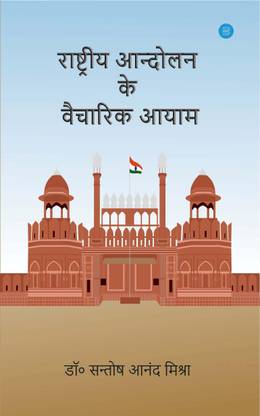
- Dr. Santosh Anand Mishra is a distinguished writer, historian, and academician with deep expertise in Indian literature and history. He hails from Mishrauli village in the Darbhanga district of Bihar, where his parents, Sri Chandra Narayan Mishra and Srimati Ramkali Devi, played an instrumental role in fostering his academic journey. Dr. Mishra holds an impressive array of academic credentials, including: • Ph.D. in History • Master's degrees in History, Hindi Literature, and Library Science • LL.B. (Bachelor of Law) • B.Ed. (Bachelor of Education) His scholarly work spans Indian cultural heritage, the freedom movement, Bihar’s historical legacy, and socio-political discourse. Among his acclaimed publications are: • Rastriya Andolan ke Vaicharik Aayam • Virasat-e-Bihar Currently serving as a History educator at D.A.V. Public School, Manpur, Gaya (Bihar), Dr. Mishra continues to contribute actively to the academic community. He is affiliated with several prominent organizations, including: • Akhil Bharatiya Itihas Sankalan Yojana • Indian History Congress • South Indian History Congress • Bihar Itihas Parishad



0 Comments
Thank you